Angles in the Architecture
What the architects say about the new Deering
Chicago-based HBRA Architects oversaw the 16-month revitalization of Deering Library, just as it did with the rebuilding and reopening of Deering’s west entrance in 2012. Footnotes sat down with HBRA principals Michele Silvetti-Schmitt, William Kinane, and Jerry Wright to talk about their reflections on the project, from the idiosyncrasies of architect James Gamble Rogers’s work to their favorite “interventions,” or changes, on this project.
Footnotes: How do you approach a renovation and restoration project in a 92-year-old library?
Silvetti-Schmitt: The project is extremely special for us because it’s the second James Gamble Rogers library that we’ve been honored and trusted [to renovate], the first being Sterling Memorial Library at Yale. That helped us get a sense for the richness of Rogers, his architecture, and his approach to detailing this library. That familiarity gave us a good way to respond to what we found here. When we had to make newer interventions, we started with a better understanding of what is appropriate and what respects the original design.
Newer interventions like a public elevator, for example? How difficult is it to go into a historic older building and add something modern?
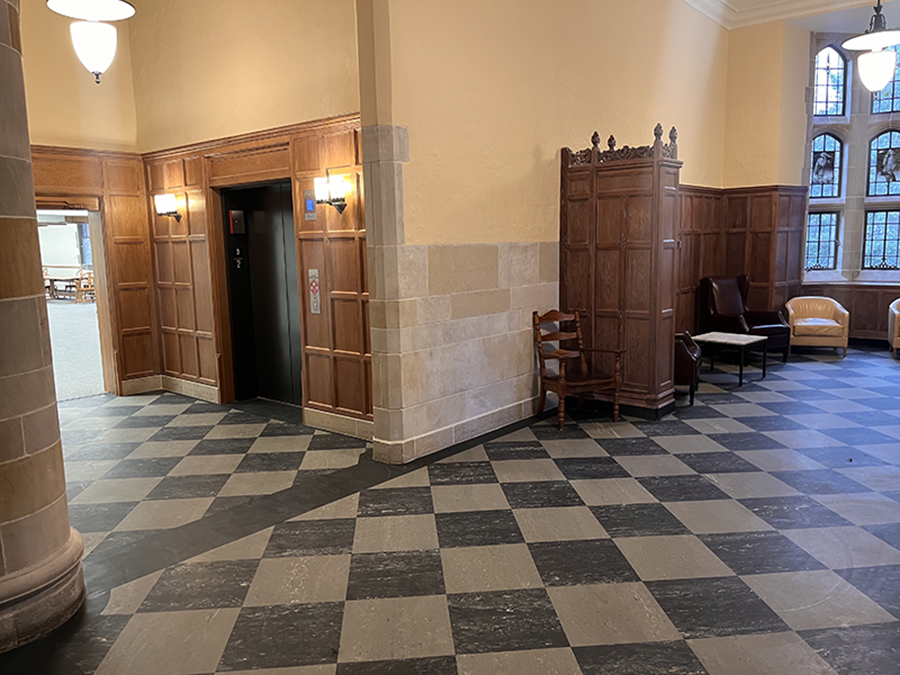
Kinane: Adding the elevator is a no-brainer, I think. If this building is to function for the next 90 years, it is something you have to do. We were lucky enough that there was a location that just popped out as obvious from the beginning with regards to its proximity to the front entry and how it worked on all three levels. Even though the elevator is obviously contemporary, it fits in a way that feels seamless and doesn’t impact the historic character of the building. That part is important, because we believe in the idea of the “invisible hand.” We don’t want our work to be jarring or noticeable to the average user of the building.
Rogers incorporated a lot of embellishments in Deering. Is there a quirkiness to this building?
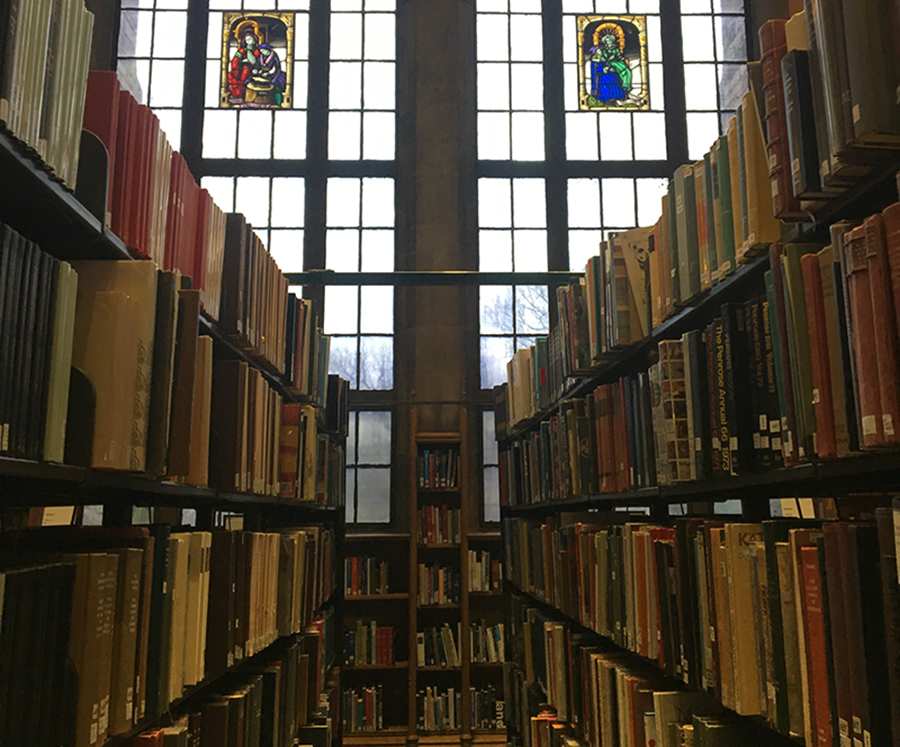
Wright: He definitely adds his own flair to Collegiate Gothic and creates what’s really kind of a new style. He did some strange things in different locations to make things work architecturally. He wasn’t necessarily committed to everything being symmetrical. There are places where someone today would say, “We’ll just live with this design quirk,” where Rogers would say, “Well, this is a design opportunity,” and he would make something out of it. You would never know something was unplanned or maybe even a mistake, because his system allowed for a lot of variation.
Kinane: There is definitely a quirkiness to Rogers. There was still very much of a rigor to what he did, but he utilized the flexibility of the Collegiate Gothic expression to its utmost degree. For example, this building has a change in its structural grid from the reading room to the back side of the building. Rogers had a very interesting way of inverting the arched opening from the reading room to the lobby where those grids collide. So he’s really inventive in that way.
Do architects form an emotional attachment to the buildings they restore?
Silvetti-Schmitt: These types of projects are the ones where you remind yourself, “This is why I’m doing this.” These buildings are part of the legacy of an institution. They give back to such a broad community, which is one of the reasons we love working with libraries and universities. These projects are not just for a single family or a small group of people—they are going to impact generations.
You say you want your work to feel invisible as much as possible. And yet, if you wanted somebody to come in and appreciate this renewed Deering, where would you direct their attention?
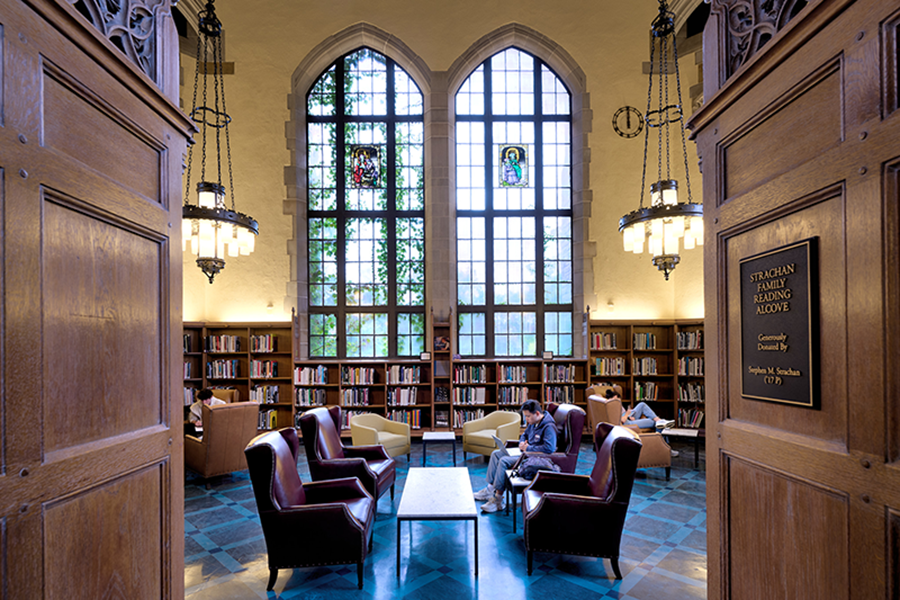
Kinane: For me it’s that southern lounge on the third floor [the new Peter and Joan McKee Reading Lounge]. It used to be an office, and there was no natural light. Now it mimics what’s occurring on the north side of the building. It gives a little place for someone to squirrel away with a book or meet somebody. It totally transformed the feeling of that side of the building by animating it with natural light.
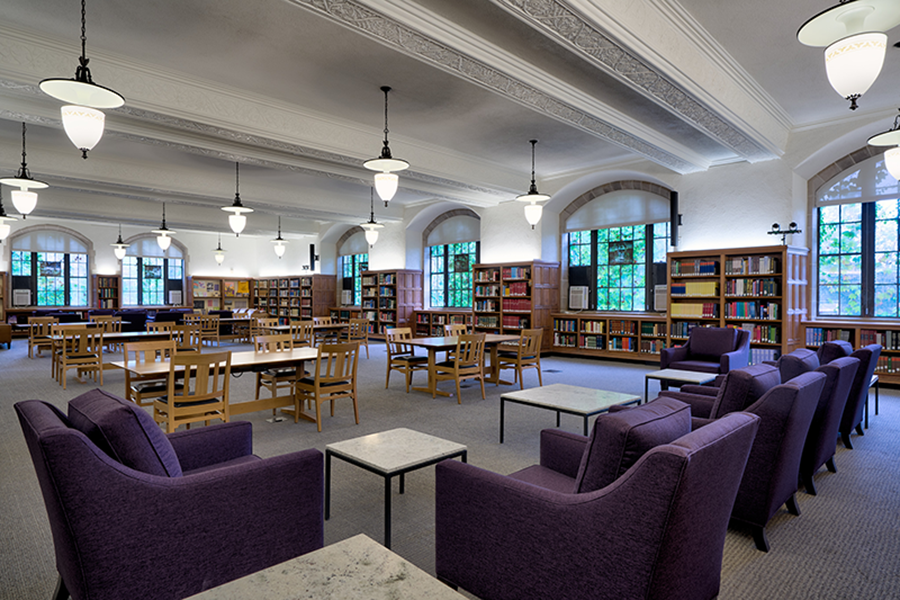
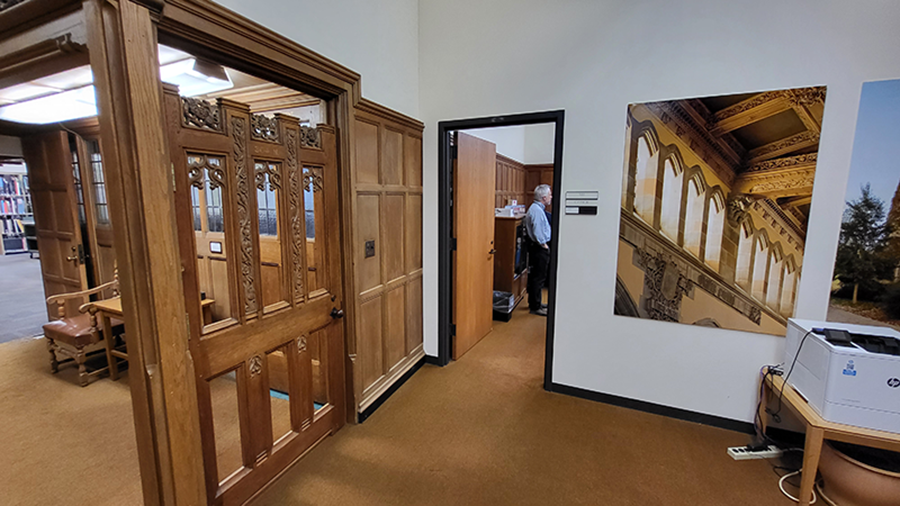
Wright: Originally, people could smoke in this building, so a lot of the stone in these spaces was black. Just by doing a very nonintrusive cleaning of the stone in the Martin Reading Room and in the new Devereaux Room, and with just a new coat of paint on the walls—that made a huge difference in the brightness of the space and that feeling people have when they walk in. You can’t tell why it feels different, but it just feels more welcoming.
Silvetti-Schmitt: The Devereaux Room. The lighting, the refresh of everything—it just feels good and welcoming without being such an obvious change. This public-facing and historically important part of the building can now be sort of a “living room” for Northwestern.
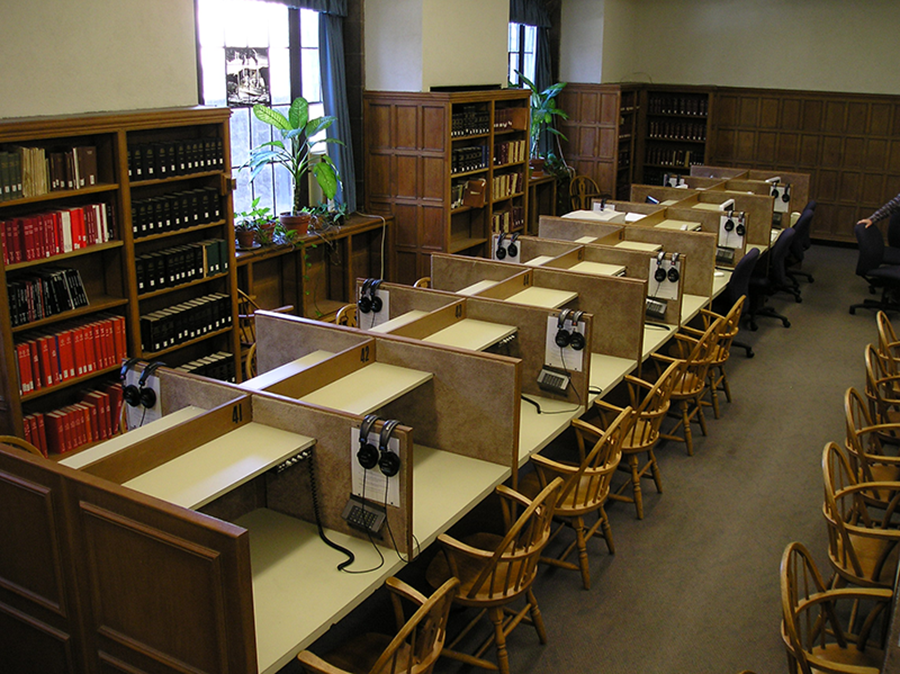
Before-and-after
Swipe through to see photos of some renovated Deering spaces.