Funds spark undergraduate research
Grants and prizes bring more students to library materials and services
A paper about Central American midwifery, written for a global health class, won a new Libraries prize designed to spark undergraduates’ use of rare collections.
The Undergraduate Archival Research Project Prize awards $1,500 for a paper written using primary-source materials. It’s the first of an expected series of prizes to reward students for using holdings of the Charles Deering McCormick Library of Special Collections and University Archives.
“We were looking for papers that used the primary sources in a way that shows the student understood not only the value of archival materials but the pitfalls,” said librarian Dana Lamparello, chair of the prize committee. She noted that an archive is only a snapshot of a time and place and sometimes does not tell a complete story on its own. “Our winner was really good about adjusting her expectations in terms of getting answers from a primary source and then posing more questions—which is a good indicator that you’re understanding the source you’re using.”
For the inaugural prize, entrants did not need to use McCormick Library holdings specifically, but they still needed to use primary sources. The committee received 21 entries—an encouraging sign for its debut, Lamparello said.
Improving access to resources is a priority of Libraries dean Xuemao Wang, so the committee plans to expand prize categories to engage more undergraduates from a wide range of disciplines. The initial round generated entries including poetry and a metatextual exhibition proposal, inspiring the committee to think more broadly about future categories, Lamparello said.
The winning paper was submitted by undergraduate Shinyi Ding. “Reading the ‘TBA’ in Central America During the ICM/USAID Grant to Expand the Role of the Midwife: 1970–1979” was written for a 300-level global health studies class, exploring how midwives in less-developed countries were once trained by medical professionals without deep regard for local traditions and beliefs. While the committee had not planned to award a runner-up, members were so taken by a second entry that the committee petitioned library leaders to fund a $500 second prize. A paper by undergraduate Faith Magiera—“Nero’s Mother and Intertextual ‘Wombs’: Reading Hamlet’s Classical Archive”—drew in part on McCormick’s copy of a book of plays by the ancient Roman dramatist Seneca. Published in 16th-century England, the copy would have been contemporary to Shakespeare.
Lamparello said that while the prize is a boon for undergraduates, they aren’t the only beneficiaries. “Librarians live to be there for a student’s ‘aha’ moment. Any opportunity to reach students in that meaningful way is something we all rally behind.”
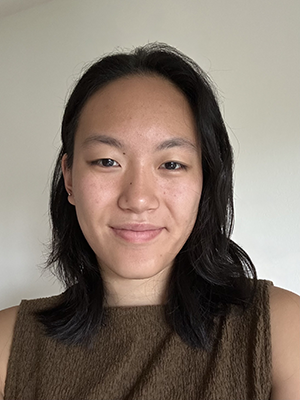 “Reading the ‘TBA’ in Central America During the ICM/USAID Grant to Expand the Role of the Midwife: 1970–1979"
by Shinyi Ding ’26
Global Health Studies 310, Maternal Health in the 20th Century (Sarah Rodriguez).